Before the twentieth century, antifreeze meant salt, not chemicals. My grandfather told me stories about pouring salt into water barrels just to keep things from freezing solid on bitter nights. So, when Charles Wurtz first prepared ethylene glycol in 1859, few saw it as more than a curiosity. Commercial production didn’t ramp up until the 1930s, driven by demand for safer, more effective antifreeze during the rapid spread of cars and trucks. By the time the Second World War moved aviation into the jet age, ethylene glycol found its place as both a coolant and a critical base material for polyester fibers. Over decades, refinements in production—from wood alcohol derivatives to advances in petrochemical cracking—have fed industries rolling from textiles to pharmaceuticals.
Ethylene glycol flows in everything from car radiators to industrial chillers. Folks in automotive repair see it as engine coolant, but its core use stretches to polyesters, solvents, and even de-icing agents at airports. Beauty products and medicines build on the molecule’s ability to carry moisture. In its pure form, it looks clear and unremarkable, but beyond the basics, manufacturers seek out glycol in high concentrations for chemical processing and mixed forms for household coolants and cleaners. Businesses keep a close eye on purity because anything less opens the door to machinery rust or dangerous exposure.
You don’t need a chemistry degree to notice ethylene glycol’s sweet, syrupy scent. With a boiling point near 197°C and a freezing point just below -12°C, this compound resists phase changes in all but the harshest conditions. Its density sits just above water—a fact I learned firsthand the first time I spilled some over a garage floor, and it moved slower than any familiar liquid. Chemically, ethylene glycol carries two alcohol groups, giving it a handshake between water solubility and reactivity. Its taste—although dangerous—once bewildered pets and children, leading to accidental poisonings.
There’s more to product labels than eye candy for regulators. Most bulk shipments of ethylene glycol must state purity, water content, acidity, and traces of diethylene glycol or other contaminants. ASTM standards drive most specifications, with grades ranging from industrial to ultra-pure, set for electronics or pharmaceutical work. Sellers include hazard markings tied to UN numbers and emergency handling codes, and storage drums often come with tamper-evident seals. More companies now post Safety Data Sheets online, reflecting both workplace safety expectations and legal obligations.
Ethylene glycol production today hangs on the hydration of ethylene oxide. In simple terms, chemical plants pump ethylene gas—often sourced from petroleum crackers—over a silver catalyst to form ethylene oxide. This highly reactive intermediate then meets water, producing ethylene glycol in a controlled reactor. Early methods, such as the old chlorohydrin pathway, faded as environmental reviews grew stricter and the need for cleaner reactions became urgent. Every modern plant I’ve toured puts a premium on energy efficiency and wastewater recycling—the byproducts from this chemistry can be rough on local river systems if not handled right.
Ethylene glycol’s double hydroxyl groups give chemists two hands to work with. They build everything from polyester through condensation with terephthalic acid, or reach for more advanced modifications like alkoxylation. Some research teams add flame-retardant groups or blend glycol with propylene glycol to alter freezing points for specialized refrigerants. I remember working in a lab where we tweaked glycol’s backbone to make biodegradable plastics, swapping in larger side chains to break down under sunlight or in soil. Large-scale chemical plants often turn ethylene glycol into glycol ethers, solvents prized for both paint and ink formulations.
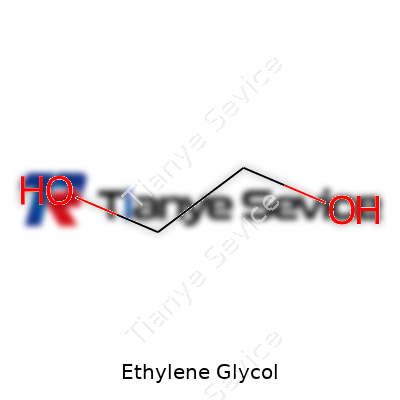
You’ll hear ethylene glycol called Monoethylene Glycol (MEG) in industry circles, especially when distinguishing it from its chemical cousins like diethylene glycol (DEG) and triethylene glycol (TEG). International trade sometimes shortens it to HOCH2CH2OH, its chemical formula, or just “glycol” for short. Some household product makers use brand names like Prestone or Zerex when selling antifreeze blends. That jumble of names reflects the molecule's wide reach—from coolant barrels to polyfiber production lines.
Ethylene glycol isn’t something to treat lightly. Even in small doses, ingestion causes kidney failure or even death, especially in kids or animals who stumble across spilled coolant. Most workspaces keep it behind locked doors or on separate, clearly labeled shelves. I’ve known mechanics who always triple-check storage tanks for leaks every shift, not because of corporate memos but because local wildlife paid the price for carelessness. For larger facilities, OSHA and EPA rules spell out safe handling practices—respirators for fumes, gloves for direct contact, eyewash stations nearby. Companies often schedule mandatory training, and I’ve sat through sessions where old-timers recall near-misses that shaped the facility rules still in place today.
Beyond car radiators, ethylene glycol runs through pipes at breweries, through cooling circuits in nuclear power plants, and through ice rinks to keep surfaces skate-ready in July. Plastics companies build polyester fibers for shirts, carpets, and packaging out of ethylene glycol as a core raw material, using huge reactors that churn day and night. Airports dump thousands of gallons for aircraft de-icing—keeping jets flying safely in snowstorms. Pharmaceutical engineers use high-purity glycol as a carrier fluid, leveraging its solvent capabilities during medicine formulation. Whether fighting winter’s chill or building the next fleece jacket, ethylene glycol goes to work under the radar across dozens of fields.
Research doesn’t stand still just because ethylene glycol feels familiar. Universities and companies race to find greener synthesis routes, hunting for ways to make glycol from biomass instead of petrochemical feedstocks. Labs look for ways to recycle used coolant and turn it back into high-quality product, chasing solutions to the millions of gallons discarded every year. Material scientists dig into using glycol derivatives for next-gen biodegradable materials or as building blocks for medical hydrogels, pushing the boundaries of what started as a plain antifreeze. Collaborative projects across continents connect chemistry, engineering, and safety experts to rethink how this simple molecule fits a changing world.
Stories about poisoned pets and tragic accidents drive ongoing toxicity research forward. Doctors know ethylene glycol metabolizes rapidly, breaking down into oxalic acid and glycolic acid, which can crystalize in the kidneys and shut them down. Rat studies and accident reports prompted tighter regulations and the push for added bitterants in consumer products to reduce unintentional ingestion. Poison control centers in most regions now run public awareness programs reminding folks to store antifreeze out of reach and clearly mark industrial containers. Medical researchers continue tracking the long-term effects of low-level exposure, looking for links to neurological issues and subtle organ damage over time.
Manufacturers face questions about how to cut dependence on fossil feedstocks and clean up contaminated runoff. More chemical companies invest in making bio-based glycols, taking sugar or cellulose from waste streams and coaxing it into pure product using novel catalysts. As recycling tech advances, more regions push to reclaim glycol from spent coolants—either through filtration, distillation, or chemical conversion—streamlining waste into valuable resource streams. The future might even see glycol derivatives in tissue engineering and biodegradable polymers, shifting the molecule’s role beyond industry and into the heart of sustainable living. The story of ethylene glycol hasn’t hit its final chapter; there’s too much at stake in both industry and community health, driving ideas that once sounded wild into practical solutions.
Most drivers have ethylene glycol sitting in their cars without giving it a second thought. It’s what keeps your engine from freezing up on a cold January morning, and what helps it stay cool in the burning heat of August. Antifreeze isn’t just bright green liquid — ethylene glycol makes it possible for a car to run smoothly through the changing seasons.
Homes and businesses with forced-air heating or chillers rely on the same chemical. Without it, pipes could burst or machinery could seize up, causing havoc for families and leaving businesses with costly repairs. Building engineers track the chemical closely, using it for its reliability in preventing damage and loss of efficiency.
Collecting plastic bottles to recycle might seem like a habit that barely matters, but ethylene glycol gives those bottles their shape in the first place. The chemical keeps factories rolling in the polyester world—from water and soda bottles to fibers in shirts and furniture stuffing. Without it, the cheap, tough plastic we take for granted would vanish.
Textiles rely on it just as much. From polyester t-shirts to tough carpeting, ethylene glycol locks everything together. Clothing’s stretchiness and resistance to shrinking owes a lot to its chemistry. This chemical sits behind the scenes, knitting together life’s daily comforts.
Despite helping cars and homes run better, ethylene glycol brings some trouble with it. The sweet taste that makes it work for coolants and de-icers also makes it a problem for pets, children, and wildlife. Just a few spoonfuls pose real danger. Each winter, animal poison control hotlines light up with calls after pets lick up a spill.
Doctors and poison control centers know ethylene glycol well for its toxicity. Early symptoms might feel innocent, like dizziness or stomach pain, but left untreated, the results are often fatal. This pushes local governments and manufacturers to add bittering agents or dye to antifreeze, making it less appealing and easier to spot. Still, mistakes happen every year.
Public health advocates routinely push for tougher labeling and spill-proof containers. These changes take pressure off parents and pet owners, helping busy families avoid disasters. Responsible storage and careful handling make a visible difference. It comes down to treating chemicals at home with the same respect given in a chemistry lab.
Recycling also steps into the debate. Only a handful of specialized facilities handle ethylene glycol recovery, so a lot of waste ends up in drains or landfills. Communities investing in local recycling programs cut down on pollution and stretch the value of every barrel. This means less waste in drinking water and less stress on local rivers and streams.
Ethylene glycol supports modern living — smoother commutes, warmer winters, and affordable goods. Examples show up quietly at work, in the car, and at home. At the same time, it demands thoughtful handling. By paying attention to how we store, use, and dispose of it, families and communities protect what matters most while holding onto the comfort and reliability the chemical brings.
Ethylene glycol shows up in many garages and workshops. Most people know it as the main ingredient in antifreeze and coolant. It keeps engines from freezing in winter and overheating during summer. What many folks don’t realize is just how dangerous it becomes once outside its original container. Both pets and children can get hurt after exposure.
One reason for the risk is simple: ethylene glycol tastes sweet. A dog might lap up a puddle in the driveway. A young child could accidentally drink what looks like a harmless liquid. According to the Centers for Disease Control and Prevention, as little as a tablespoon can poison a cat or small dog. For adults, a few ounces can prove fatal without rapid treatment. The poison starts damaging the kidneys long before symptoms show up. By the time vomiting or confusion appear, the body has already absorbed the chemical.
I learned about this risk while working at an animal shelter. We lost a pair of kittens after they wandered through a neighbor’s garage. Despite the best efforts of the vet, we couldn’t save them. That experience hammered home the necessity of proper storage and immediate cleanup. Not only did I start warning adopters about antifreeze in their homes, but I also talked with neighborhood mechanics about safer alternatives.
Reports from the American Association of Poison Control Centers have tracked thousands of cases yearly involving ethylene glycol. Children under age five often account for a large share because of curiosity and their tendency to taste unknown liquids. Pets, especially cats and dogs, suffer even more often, simply because they can't resist the taste and lack the instinct to avoid chemicals. Each year, social media fills with warnings during winter, but accidents keep happening.
Better habits could lower the risk. Cleaning up spills right after they happen and storing antifreeze in locked cabinets helps a lot. Poison labels only work if people actually read and heed them. Switching to propylene glycol-based antifreeze seems smart, especially in houses with pets or young children. Propylene glycol costs a bit more, but it’s much safer around the home. Big brands now make “pet safe” antifreeze, which uses propylene glycol and has a bittering agent, so animals turn away instead of drinking more.
My real eye-opener came after talking with a family friend whose toddler spent two days in the ICU after finding a forgotten bottle. They assumed everything was out of reach. After that, they changed how they store and use automotive fluids. They started keeping anything with a warning label in the outdoor shed behind a childproof lock. I found myself doing a sweep every fall, making sure none of my neighbors or family had missed a bottle here or there.
Simple acts like using safer products, reading labels, and staying aware can prevent most poisonings. The stakes make these steps worth it. Clean garages, secure storerooms, and small label changes save lives. Everyone should know about the sweet taste and silent threat of ethylene glycol. The key is to stop accidents before they start.
Ethylene glycol shows up in plenty of garages and workshops, hidden inside products like antifreeze or coolants. People working with it long enough pick up a respect for just how toxic it can be. A tiny amount swallowed, even by accident, can damage the kidneys or nervous system. It’s colorless and almost sweet to the taste, which fools children and pets into sampling what they shouldn’t. Even skin contact builds up risk, especially without regular washing up. The unpleasant truth: plenty of exposures happen quietly, so nobody realizes it until symptoms start.
Every time I handled ethylene glycol during winter maintenance work, gloves came first. Nitrile or neoprene stands up to this chemical better than the thin latex most folks keep in the shed. Splashes don’t ask permission, so full-coverage eye protection saves a lot of grief. If a funnel slips, or a hose connection bursts, it’s easy to catch a drop in the eye, which burns and sometimes irritates for hours. Breathing isn’t usually an issue with small amounts, though spills inside small spaces, or steam from boiling coolant, can end up inhaled. Masks rated for organic vapors add another layer of protection inside tight workspaces.
Over the years, bottles left uncapped or carelessly stored lead to more trouble than most imagine. Keeping product in a locked cabinet can stop curious kids and pets from finding it. Plain shelving leaves bottles at risk for dropping or leaking, so secondary containers like chemical trays or bins catch the drips. Containers labeled clearly with large print catch the eye of anyone grabbing for something quickly. Too many people rely on original containers, but marking them with date and purpose heads off confusion next season.
Spills get tricky in crowded workspaces. Toweling up liquid right away keeps it from tracking across the floor. Cat litter or a commercial absorbent pulls up most fluids, making sweep-up easier and reducing slip hazards. Disposing of waste takes discipline—never pour it down the drain or onto the ground. Community hazardous waste disposal programs take jugs and soaked rags. Ignore their rules, and contaminated water runs off to storm drains, setting up problems for both people and wildlife.
Anyone who works around ethylene glycol learns to watch for headaches, nausea, or confusion soon after exposure. Skin stays pink or blisters from repeated contact. These might seem mild at first but can pile up quickly into emergencies. Any signs of poisoning, especially drowsiness or rapid breathing, call for a trip to the emergency room, fast. Doctors have ways to reverse the effects if caught early, but not if ignored.
Experience counts most when dealing with toxic chemicals. Chasing fresh information about safe handling practices often reveals new health guidelines or better protective gear. Training sessions at work paid off for us, especially demonstrations on what to do when things go wrong. Respect for the risks doesn’t mean fear; it means knowing the signs, keeping protective equipment handy, and treating every spill or exposure like it matters. Communities, workplaces, and families all benefit when a little caution takes priority.
Ethylene glycol often pops up in places you may not expect. From car antifreeze to industrial coolants, it keeps engines running smoothly and helps factories run efficiently. Its sweet taste has fooled many, including animals and children, leading to dangerous—sometimes deadly—accidents. This simple fact alone demands that storage and transport happen under strict safety measures.
Across my time working near chemical plants, safety always took center stage. Proper storage wasn’t just a best practice—lives depended on it. Ethylene glycol typically goes into steel or high-density polyethylene tanks. Both options lock out sunlight and outside air, blocking unwanted chemical reactions. Regular folks don’t always realize that even the container lining makes a difference. Unlined tanks or rusty containers can turn a safe product hazardous through contamination.
The daily grind in a warehouse storing chemicals like ethylene glycol relies on good habits. Tanks get checked often for leaks or loose fittings. Even a small drip can start an environmental disaster. Signage with hazard warnings sits on every tank, which keeps folks alert and gives emergency response teams a leg up during a crisis. Good ventilation stands as another critical factor. Vapors build up in a closed space, and that’s a recipe for trouble. Keeping the air moving helps keep workers safe and meets government regulations.
Getting ethylene glycol from factory to factory covers a lot of ground—literally. Bulk shipments go out in tank trucks or railcars built for hazardous liquids. Before a driver pulls away, they check valves, gaskets, and pressure-release systems—one overlooked bolt can lead to spillages that are not only costly but harmful to the environment. Smaller deliveries use steel drums or heavy-duty plastic totes. During loading and unloading, spill kits and protective gear stand nearby, making sure that unexpected splashes don’t end up on the ground or on workers’ skin. From personal experience, one splash—no matter how small—can teach someone respect for safety protocols very quickly.
Government rules shape the way we store and haul ethylene glycol. Agencies like OSHA and the EPA set minimum requirements. Tank designs, emergency plans, even record-keeping—none of it gets left to chance. These aren’t just hoops for companies to jump through; I’ve seen real-world incidents where strong rules meant disaster got stopped before it started. Local firefighters and first responders train for spills and use these regulations to guide their actions. Fines sting, but the real motivation often comes from not wanting to see anyone hurt—and not wanting to deal with costly cleanup jobs.
New tech keeps changing the game. Sensors can now detect leaks before they become visible. Automation makes tank checks more reliable. The industry should keep pushing for smarter, safer features—like remote monitoring systems or double-walled storage containers. Training drills, plain language labels, and regular equipment upgrades help people stay sharp. The more everyday people know about how chemicals like ethylene glycol move and get stored, the safer everyone remains, from plant worker to neighborhood resident.
Ethylene glycol shows up in surprising places. Think about changing a car’s coolant or grabbing winter windshield de-icer. Most people encounter it as “antifreeze,” squeezed from jugs into radiators or poured right onto windshields. All that convenience comes with a tradeoff: it doesn’t stay in the bottle forever. Spills, backyard repairs, or leaky machinery send it trickling onto concrete, soil, or into drains. Heavy rain can wash what’s left into stormwater, carrying it toward streams or lakes. Once it’s out in the open, it doesn’t just disappear.
Once ethylene glycol hits soil or water, the problems start cropping up. Bacteria love to feast on it, breaking it down pretty quickly compared to some other chemicals. That might sound positive, but this feast needs a lot of oxygen. The microbial feeding frenzy can suck up dissolved oxygen before fish or frogs get their share, especially in slow-moving streams and ponds. Wildlife and pets might drink the sweet-tasting liquid, unaware of the dangers. Just a few ounces, especially for a pet, can be lethal. Even in humans, accidental ingestion means a trip to the emergency room, and sometimes far worse outcomes.
Ethylene glycol doesn’t settle for hanging around in the mud or floating on top of a waterway. It moves with water, often traveling miles from where it started. Most plants and animals don’t store much of it in their bodies, which helps keep it from building up along the food chain like mercury or DDT. Still, rapid breakdown can do its own kind of harm. As oxygen gets used up, some waterways turn into dead zones. Dead fish, sick wildlife, and fouled-up ecosystems can result, all from what started as a simple coolant refill.
Regulation helps, but the real difference shows up where people actually do the hard work of proper disposal. Any automotive shop or recycling center that collects used antifreeze keeps a good chunk of ethylene glycol from running loose. Pouring it onto gravel or down the sewer undoes that progress. The U.S. Environmental Protection Agency marks ethylene glycol as a hazardous waste when it’s spent. Canada’s cities set up dedicated collection days to tackle the stuff. Across Europe, disposal rules get stricter each year for both commercial and personal waste.
Manufacturers now recognize the risks. They have begun pushing “propylene glycol” as a less toxic alternative, especially for RV and marine applications. It’s not a perfect replacement—still a chemical, still a pollutant if dumped irresponsibly—but less deadly to pets and wildlife. Commercial fleets invest in closed-loop coolant recycling systems, cutting down the need for new production and reducing spilled waste. Education often lags behind, leaving garage tinkerers unaware of safer steps that could save a neighbor’s dog or keep a river alive a little longer.
Personal experience has taught me the importance of closing the loop. At my old mechanic’s shop, we labeled a drum “used antifreeze only,” and even those two words turned a chaotic mess into an organized, manageable process. Municipalities build on that kind of change by offering collection points and explaining risks clearly, breaking down why habits need to change and what can fix the problem.
Nothing about ethylene glycol forces a grim outcome—habits shape what happens next. Recycling, proper storage, and clear disposal practices keep water and wildlife safer for everyone. Education and regulations support the work, but responsibility rests as much with individuals as it does with any company or government.
| Names | |
| Preferred IUPAC name | ethane-1,2-diol |
| Other names |
1,2-Ethanediol
Ethane-1,2-diol Glycol |
| Pronunciation | /ˈɛθ.ɪ.liːn ˈɡlaɪ.kɒl/ |
| Identifiers | |
| CAS Number | 107-21-1 |
| 3D model (JSmol) | `C1CO1` |
| Beilstein Reference | 821820 |
| ChEBI | CHEBI:30742 |
| ChEMBL | CHEMBL711 |
| ChemSpider | 5589 |
| DrugBank | DB01034 |
| ECHA InfoCard | 03-2119457556-33-0000 |
| EC Number | 203-473-3 |
| Gmelin Reference | 842 |
| KEGG | C01738 |
| MeSH | D005006 |
| PubChem CID | 174 |
| RTECS number | KW2975000 |
| UNII | 6P6L6G8J5P |
| UN number | UN3082 |
| CompTox Dashboard (EPA) | urn:uuid:fdc06b9e-04f9-4c16-9db7-3b0b0a0e5b8b |
| Properties | |
| Chemical formula | C2H6O2 |
| Molar mass | 62.07 g/mol |
| Appearance | Colorless, odorless, viscous liquid |
| Odor | Odorless |
| Density | 1.113 g/cm³ |
| Solubility in water | Miscible |
| log P | -1.36 |
| Vapor pressure | 0.06 mmHg (20°C) |
| Acidity (pKa) | 14.2 |
| Basicity (pKb) | 15.1 |
| Magnetic susceptibility (χ) | −0.932×10⁻⁶ |
| Refractive index (nD) | 1.430 |
| Viscosity | 16.1 mPa·s (at 20°C) |
| Dipole moment | 2.27 D |
| Thermochemistry | |
| Std molar entropy (S⦵298) | 198.0 J·mol⁻¹·K⁻¹ |
| Std enthalpy of formation (ΔfH⦵298) | -467.0 kJ/mol |
| Std enthalpy of combustion (ΔcH⦵298) | -1367 kJ·mol⁻¹ |
| Pharmacology | |
| ATC code | V07AY04 |
| Hazards | |
| Main hazards | Toxic if swallowed, causes serious eye irritation, may cause damage to organs through prolonged or repeated exposure. |
| GHS labelling | GHS02, GHS07 |
| Pictograms | GHS06,GHS08 |
| Signal word | Warning |
| Hazard statements | H302: Harmful if swallowed. H373: May cause damage to organs through prolonged or repeated exposure. |
| Precautionary statements | P210, P233, P240, P241, P242, P243, P260, P264, P270, P271, P280, P301+P312, P305+P351+P338, P337+P313, P403+P235, P501 |
| NFPA 704 (fire diamond) | 2-2-0 |
| Flash point | 111°C |
| Autoignition temperature | 398 °C |
| Explosive limits | 3.2–15.3% |
| Lethal dose or concentration | LD50 oral rat 4,700 mg/kg |
| LD50 (median dose) | LD50 (median dose): 1400 mg/kg (oral, rat) |
| NIOSH | K023 |
| PEL (Permissible) | 50 ppm |
| REL (Recommended) | 25 ppm |
| IDLH (Immediate danger) | 10,000 ppm |
| Related compounds | |
| Related compounds |
Diethylene glycol
Triethylene glycol Polyethylene glycol Propylene glycol 1,2-Butanediol |